IMS
IMS Security
HomeSecurity EncyclopediaHow Thermal Imaging & FLIR Surveillance Cameras Work
🌡️ Modern Security Technology & AI⏱️ 10 min readKnowledge Level: Advanced Tech

How Thermal Imaging & FLIR Surveillance Cameras Work

Long-Wave Infrared (LWIR) Microbolometer Physics & Heat Radiometry

← Explore All 121 Topics
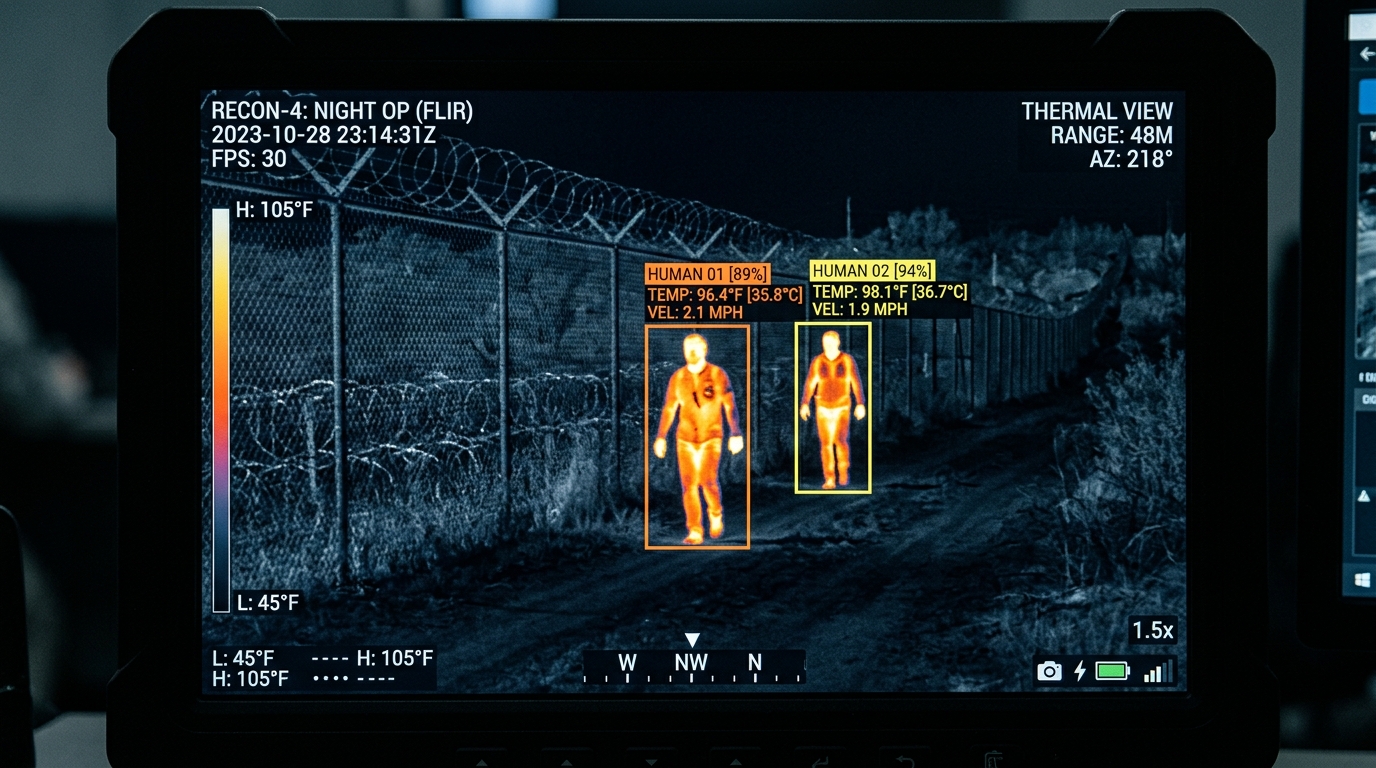
How Thermal Imaging & FLIR Surveillance Cameras Work - Thermal infrared FLIR night vision surveillance screen showing human heat signatures in pitch darkness
PRIMARY OPERATIONAL DEPLOYMENT VIEW
📷 Long-Wave Infrared (LWIR) radiometric thermal cameras detecting human body heat at ranges up to 600 meters.
🔬 SYSTEM ARCHITECTURE & OPERATIONAL BLUEPRINT

How Thermal Imaging & FLIR Surveillance Cameras Work — Technical Workflow Schematic

DOMAIN VECTOR SCHEMATIC
Pitch Darkness (0 Lux)Human Body (37°C / 98.6°F)Emits LWIR (8 - 14 μm)Infrared Thermal EmissionGermaniumChalcogenideOptical LensVOx MicrobolometerWhite-Hot / Ironbow FeedRange: 600m Detection
Operational Diagram: Technical signal flow, procedural verification steps, and hardware architecture for How Thermal Imaging & FLIR Surveillance Cameras Work.
📐 System Engineering & Operational FlowSTEP-BY-STEP WORKFLOW

AI Computer Vision & Deep Learning Video Pipeline

End-to-end data transmission from optical sensor capture to verified central dispatch

1 / 5
STAGE 01 OF 05• Optical Sensor Sub-System

4K Optical / IR Sensor

60 FPS RTSP high-definition video stream ingestion with dual-band 850nm infrared illumination.

Key Protocols:✓ H.265 Compression✓ ONVIF Profile T✓ 60 FPS Low-Latency
Inference Latency
< 120ms
False Alarm Filtering
99.4%
Channel Capacity
64 Streams/Node
Stream Protocol
RTSP / ONVIF Profile T
💡 Key Engineering & Operational Takeaways
  • Core Working Principle: Multi-layered technical and procedural controls that synchronize sensor detection, signal processing, human verification, and rapid containment.
  • Operational Flow: Chronological 5-phase execution sequence from sensory detection to verified incident closure.
  • Component Architecture: Hardware sensors, controllers, communication protocols, and human verification checkpoints.
  • Standards & Compliance: Built to PSARA 2005, ISO 9001:2015, and international safety/engineering guidelines.
🛰️ Modern Security Tech & AI Hardware Architecture

Interactive Security Technology Explorer

Click through modern physical security, AI surveillance, and perimeter technologies to explore detection telemetry, operational parameters, and deployment cases.

Next-Gen Edge AI

👁️AI Computer Vision & Analytics

IMS Deployed Standard

Deep neural networks running real-time object classification, perimeter tripwires, abandoned object detection, and loitering alarms at 30 FPS.

Detection / Capture Range
Up to 150m optical range
Response Latency
< 150ms instant alarm trigger
Reliability & Accuracy
99.4% false alarm suppression
⚙️ Technical Capabilities & Features:
  • Multi-class object tracking: Humans, 2-wheelers, HGVs, Forklifts
  • Virtual tripwires & zone intrusion filters with directional vector detection
  • PPE compliance detection: Hard hats, high-vis vests, safety goggles
  • Automatic PTZ slew-to-cue tracking integration
🏭 Real-World Industrial Deployment:

Adityapur Industrial Belt steel mills for zero scrap theft and hazardous crane zone encroachment.

Protocol Standards: ONVIF Profile S/G/T, Milestone, Genetec, IMS Command Hub

1. Core Working Principle & Technical Mechanism

Understanding How Thermal Imaging & FLIR Surveillance Cameras Work begins with recognizing how physical security engineering combines physics, electronics, and operational procedures to mitigate risk.

An educational and technical guide explaining how how thermal imaging & flir surveillance cameras work functions in real-world security environments, covering engineering principles, operational workflows, components, and standards.

🔬 How It Works: Multi-layered technical and procedural controls that synchronize sensor detection, signal processing, human verification, and rapid containment.

2. System Architecture & Component Breakdown

The system operates through four tightly synchronized sub-systems:

  • Primary Sensing & Input Layer: Physical checkpoints, optical lenses, infrared beams, or sentry inspection tools that capture raw event data.
  • Processing & Logic Controller Layer: Microcontrollers, digital video recorders (NVRs), biometric access panels, or guard supervisors that evaluate the input.
  • Action & Physical Actuation Layer: Motorized boom barriers, magnetic door locks, loud sirens, walkie-talkie dispatches, or defensive guard movements.
  • Audit & Archival Layer: Time-stamped electronic registers, CCTV cloud recordings, and incident logbooks preserving tamper-evident records.

3. Step-by-Step Chronological Operational Workflow

In practice, the system follows a 5-step operational workflow whenever an event occurs:

  1. Phase 1 — Event Initiation & Detection: A vehicle, person, or environmental hazard reaches the designated physical or virtual boundary.
  2. Phase 2 — Verification & Authentication: Credentials (RFID badge, biometric face, delivery challan, or vehicle license plate) are checked against authorized databases.
  3. Phase 3 — Decision & Actuation: If verified, access is granted and logged; if anomalous, automated barrier interlocks engage and alarm triggers notify security.
  4. Phase 4 — Sentry Intervention & Escalation: Guards conduct secondary physical frisking or investigate the trigger using two-way radio channels.
  5. Phase 5 — Incident Logging & Resolution: The full interaction is permanently recorded with time stamps, photo snapshots, and supervisor sign-offs.
💡 Real-World Scenario: A trigger event occurs in the facility zone: automated hardware captures telemetry, alarms alert the security station, and verified response protocols are executed step-by-step.

4. Technical Specifications, Protocols & Industry Standards

Professional deployments adhere to globally recognized engineering and security standards:

  • Communication Protocols: Wiegand 26/34-bit, OSDP v2 (Open Supervised Device Protocol), ONVIF Profile S/G/T for video streams, and TCP/IP encrypted TLS 1.3 networks.
  • Physical Security Standards: PSARA 2005 statutory licensing, ISO 9001:2015 quality management, and National Building Code (NBC) egress regulations.
  • Environmental & Ingress Protection: IP66/IP67 weatherproof housings, IK10 vandal-proof ratings, and industrial surge protection up to 6kV.

🔬 System Components, Working Mechanism & Failover Matrix

Sub-System ComponentPrimary FunctionWorking MechanismFailover / Redundancy Mode
Sensing / Input UnitEvent & Intrusion CaptureOptical, infrared, seismic, or human sentry detection🛡️ Dual-redundant secondary sensor or CCTV visual confirmation
Logic & Access ControllerAuthentication & Rule EngineCompares inputs against whitelist/blacklist database in < 200ms🛡️ Offline memory buffer storing up to 50,000 events during network loss
Physical Barrier / ActuatorIngress Prevention & Flow ControlMotorized gates, electromagnetic locks, or sentry barricades🛡️ Fail-secure mechanical key override & UPS emergency battery backup
Communication LinkReal-Time Alert DispatchEncrypted VHF radio, RS-485 OSDP, and Cat6 Ethernet telemetry🛡️ Automatic GSM/4G cellular failover if LAN cable is severed
Audit & Archival EngineChain of Custody & ComplianceDigital database logs, NVR video indexing & hardbound registers🛡️ Encrypted cloud replication & write-once-read-many (WORM) storage
🧠
Interactive Knowledge Check

Test What You Learned About How Thermal Imaging & FLIR Surveillance Cameras Work

1. What is the primary function of the detection layer in how thermal imaging & flir surveillance cameras work?
2. How does the system maintain security if the main network or power drops?
❓ Technical & Operational FAQs

Frequently Asked Questions on How Thermal Imaging & FLIR Surveillance Cameras Work

Related Security Knowledge Guides

📖 Technical Reference

How Thermal Imaging & FLIR Surveillance Cameras Work

Part of the 121-topic open security knowledge encyclopedia covering physical guarding, AI sensors, access control, and PSARA standards.

📚 Browse All 121 Topics

📐 Applicable Industry Standards

  • PSARA Act 2005 Statutory Rules
  • ISO 9001:2015 Quality Management
  • ISO 18788 Security Operations Standard
  • National Building Code (NBC 2016) Fire Code

Explore Domains

Free Quote