
IMS Logo
IMS Security
Home›Security Encyclopedia›How Unarmed Security & Front-Desk Concierge Systems Work
👔 Types of Security Services⏱️ 8 min readKnowledge Level: Foundational

How Unarmed Security & Front-Desk Concierge Systems Work

De-escalation Psychology, Visitor Flow Routing, Baggage Screening & Lobby Access

← Explore All 121 Topics
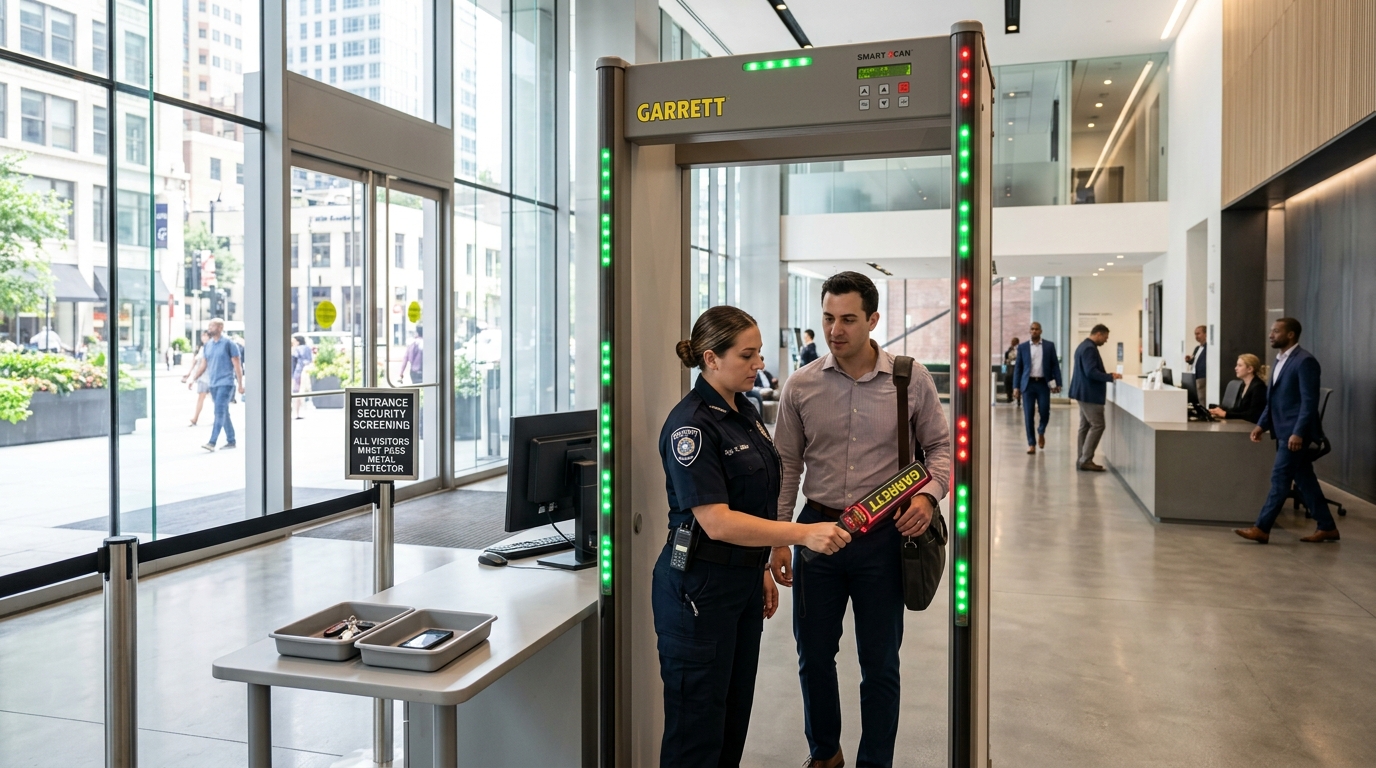
How Unarmed Security & Front-Desk Concierge Systems Work - Multi-zone walk-through metal detector portal frame gate in corporate lobby with guard frisking wand
PRIMARY OPERATIONAL DEPLOYMENT VIEW
📷 Pulse induction magnetic coils detecting concealed weapons with height-indicating LED zone pillars.
🔬 SYSTEM ARCHITECTURE & OPERATIONAL BLUEPRINT

How Unarmed Security & Front-Desk Concierge Systems Work — Technical Workflow Schematic

DOMAIN VECTOR SCHEMATIC
Operational Diagram: Technical signal flow, procedural verification steps, and hardware architecture for How Unarmed Security & Front-Desk Concierge Systems Work.
📐 System Engineering & Operational FlowSTEP-BY-STEP WORKFLOW

5-Layer Concentric Defense-in-Depth Security Model

Hierarchical concentric rings delaying, detecting, and containing threats before reaching core assets

1 / 5
STAGE 01 OF 05• Boundary Fence Sub-System

Outer Perimeter & Property Line

Anti-climb chainlink fence with concertina razor wire, PIDS fiber sensor cables, and ANPR gate boom barriers.

Key Protocols:✓ Layer 1 Defense✓ Deter & Delay✓ PIDS Sensor Cable
Delay Time Target
> 15 Minutes to Core
Detection Redundancy
Min 2 Independent Sensors/Layer
Access Hierarchy
Strict Least-Privilege Model
Response Protocol
Layer 1 Intercept Before Layer 3
💡 Key Engineering & Operational Takeaways
  • •Core Working Principle: Customer-facing presence using situational awareness, computerized badge systems, and direct panic button integration to manage entry without hostility.
  • •Operational Flow: Chronological 5-phase execution sequence from sensory detection to verified incident closure.
  • •Component Architecture: Hardware sensors, controllers, communication protocols, and human verification checkpoints.
  • •Standards & Compliance: Built to PSARA 2005, ISO 9001:2015, and international safety/engineering guidelines.
✓ Interactive Operational Readiness & Audit Checklist

How Unarmed Security & Front-Desk Concierge Systems Work — Operational Readiness Checklist

Tick each checkpoint to evaluate whether your current facility security operations meet ISO & PSARA benchmarks.

0%
0/6 Verified

100% Police Verified & PSARA Certified Guards

Compliance

All deployed personnel have clean PCC records from local district police headquarters.

Dual Weighbridge Gross/Tare Gross Verification

Gate Control

Material trucks weighed on entry and exit with computer-generated delivery challan stamp.

Unannounced Night Mobile Patrol Audits

Patrols

Field security officer conducts surprise inspections between 00:00 - 04:00 with clocking wand logs.

Monthly Fire Hydrant & Extinguisher Inspection

Life Safety

All ABC/CO2 cylinders checked for pressure gauge, seal integrity, and nozzle obstruction.

Handheld Metal Detector Frisking & Bag Screening

Access Control

All non-employee visitors undergo physical frisking and baggage logging at main gate.

Statutory EPF, ESIC & Minimum Wage Direct Bank Transfer

Labour Law

Zero sub-contracting wage slippage; all guards receive statutory wage slips and insurance cards.

1. Core Working Principle & Technical Mechanism

Understanding How Unarmed Security & Front-Desk Concierge Systems Work begins with recognizing how physical security engineering combines physics, electronics, and operational procedures to mitigate risk.

Understand how unarmed concierge security maintains open hospitality while ensuring total building security through non-verbal threat cues, badge authentication, and discrete communications.

🔬 How It Works: Customer-facing presence using situational awareness, computerized badge systems, and direct panic button integration to manage entry without hostility.

2. System Architecture & Component Breakdown

The system operates through four tightly synchronized sub-systems:

  • Primary Sensing & Input Layer: Physical checkpoints, optical lenses, infrared beams, or sentry inspection tools that capture raw event data.
  • Processing & Logic Controller Layer: Microcontrollers, digital video recorders (NVRs), biometric access panels, or guard supervisors that evaluate the input.
  • Action & Physical Actuation Layer: Motorized boom barriers, magnetic door locks, loud sirens, walkie-talkie dispatches, or defensive guard movements.
  • Audit & Archival Layer: Time-stamped electronic registers, CCTV cloud recordings, and incident logbooks preserving tamper-evident records.

3. Step-by-Step Chronological Operational Workflow

In practice, the system follows a 5-step operational workflow whenever an event occurs:

  1. Phase 1 — Event Initiation & Detection: A vehicle, person, or environmental hazard reaches the designated physical or virtual boundary.
  2. Phase 2 — Verification & Authentication: Credentials (RFID badge, biometric face, delivery challan, or vehicle license plate) are checked against authorized databases.
  3. Phase 3 — Decision & Actuation: If verified, access is granted and logged; if anomalous, automated barrier interlocks engage and alarm triggers notify security.
  4. Phase 4 — Sentry Intervention & Escalation: Guards conduct secondary physical frisking or investigate the trigger using two-way radio channels.
  5. Phase 5 — Incident Logging & Resolution: The full interaction is permanently recorded with time stamps, photo snapshots, and supervisor sign-offs.
💡 Real-World Scenario: A visitor arrives without an appointment: the concierge checks the internal directory, places an intercom call to the host, and generates a time-limited visitor pass.

4. Technical Specifications, Protocols & Industry Standards

Professional deployments adhere to globally recognized engineering and security standards:

  • Communication Protocols: Wiegand 26/34-bit, OSDP v2 (Open Supervised Device Protocol), ONVIF Profile S/G/T for video streams, and TCP/IP encrypted TLS 1.3 networks.
  • Physical Security Standards: PSARA 2005 statutory licensing, ISO 9001:2015 quality management, and National Building Code (NBC) egress regulations.
  • Environmental & Ingress Protection: IP66/IP67 weatherproof housings, IK10 vandal-proof ratings, and industrial surge protection up to 6kV.

🔬 System Components, Working Mechanism & Failover Matrix

Sub-System ComponentPrimary FunctionWorking MechanismFailover / Redundancy Mode
Sensing / Input UnitEvent & Intrusion CaptureOptical, infrared, seismic, or human sentry detection🛡️ Dual-redundant secondary sensor or CCTV visual confirmation
Logic & Access ControllerAuthentication & Rule EngineCompares inputs against whitelist/blacklist database in < 200ms🛡️ Offline memory buffer storing up to 50,000 events during network loss
Physical Barrier / ActuatorIngress Prevention & Flow ControlMotorized gates, electromagnetic locks, or sentry barricades🛡️ Fail-secure mechanical key override & UPS emergency battery backup
Communication LinkReal-Time Alert DispatchEncrypted VHF radio, RS-485 OSDP, and Cat6 Ethernet telemetry🛡️ Automatic GSM/4G cellular failover if LAN cable is severed
Audit & Archival EngineChain of Custody & ComplianceDigital database logs, NVR video indexing & hardbound registers🛡️ Encrypted cloud replication & write-once-read-many (WORM) storage
🧠
Interactive Knowledge Check

Test What You Learned About How Unarmed Security & Front-Desk Concierge Systems Work

1. What is the primary function of the detection layer in how unarmed security & front-desk concierge systems work?
2. How does the system maintain security if the main network or power drops?
❓ Technical & Operational FAQs

Frequently Asked Questions on How Unarmed Security & Front-Desk Concierge Systems Work

Related Security Knowledge Guides

📖 Technical Reference

How Unarmed Security & Front-Desk Concierge Systems Work

Part of the 121-topic open security knowledge encyclopedia covering physical guarding, AI sensors, access control, and PSARA standards.

📚 Browse All 121 Topics

📐 Applicable Industry Standards

  • • PSARA Act 2005 Statutory Rules
  • • ISO 9001:2015 Quality Management
  • • ISO 18788 Security Operations Standard
  • • National Building Code (NBC 2016) Fire Code

Explore Domains

Free Quote