IMS
IMS Security
HomeSecurity EncyclopediaHow Smart Wireless Electronic Door Locks Work
🔒 Modern Security Technology & AI⏱️ 10 min readKnowledge Level: Advanced Tech

How Smart Wireless Electronic Door Locks Work

Encrypted Bluetooth Low Energy (BLE), Motorized Deadbolts & Audit Trails

← Explore All 121 Topics
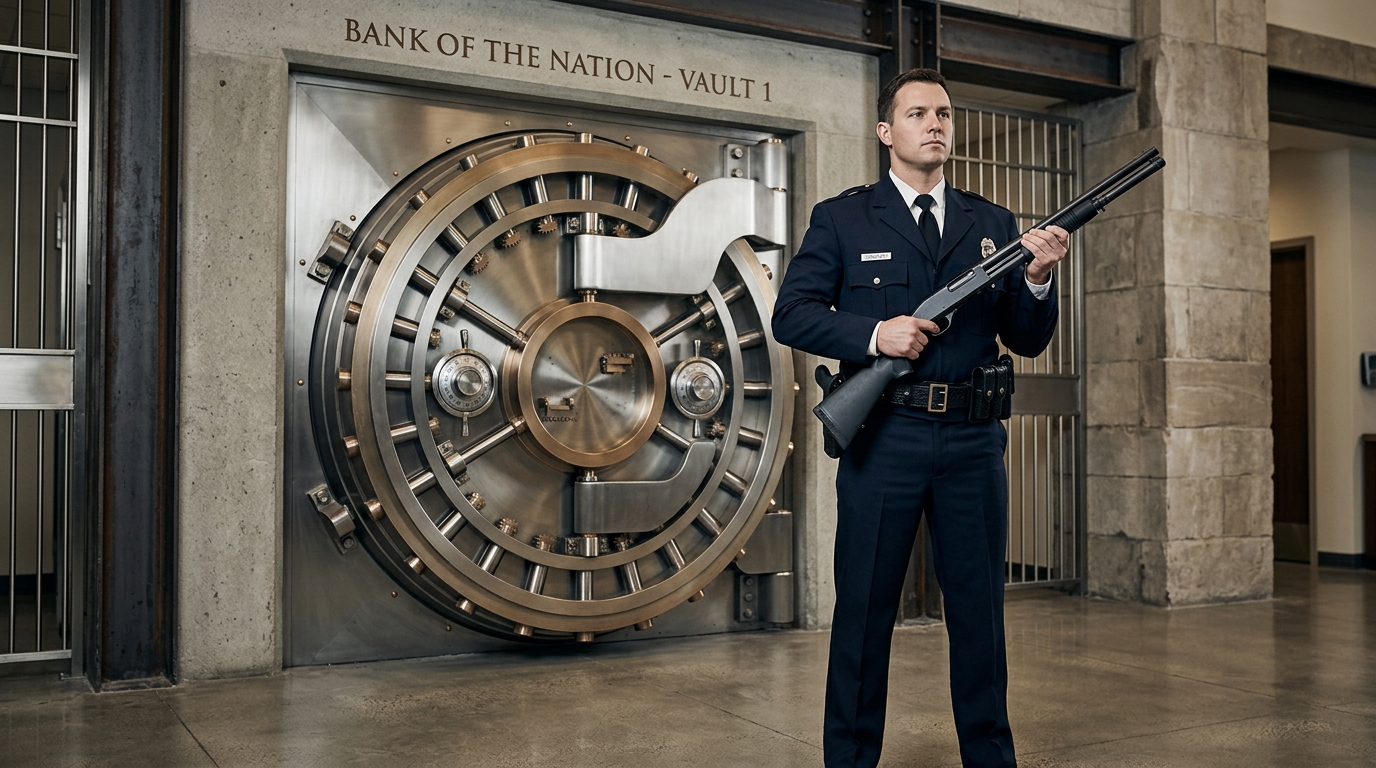
How Smart Wireless Electronic Door Locks Work - Armed security officer with licensed firearm guarding bank strongroom steel time-lock vault door
PRIMARY OPERATIONAL DEPLOYMENT VIEW
📷 Armed sentry positioning at dual-custody strongroom vaults and high-value cash transit airlocks.
🔬 SYSTEM ARCHITECTURE & OPERATIONAL BLUEPRINT

How Smart Wireless Electronic Door Locks Work — Technical Workflow Schematic

DOMAIN VECTOR SCHEMATIC
OUTER DOOR 1💳Mifare DESFire EV3Card Tap / 3D FaceDoor 1 UnlocksAIRLOCK INTERLOCK CHAMBERFLOOR LOAD SENSOR: 1 PERSON• Optical Anti-Tailgating Overhead Grid• Door 1 MUST fully seal before Door 2 arms• 3D Contactless Iris Scanner VerificationSingle Occupancy Confirmed (100%)INNER DOOR 2🖧Electromagnetic MaglockReleases (1200 lbs hold)Entry into Mission-Critical Vault
Operational Diagram: Technical signal flow, procedural verification steps, and hardware architecture for How Smart Wireless Electronic Door Locks Work.
📐 System Engineering & Operational FlowSTEP-BY-STEP WORKFLOW

Tier IV Interlocking Airlock Mantrap & Biometric Security

Physical interlocking access mechanism enforcing single-person entry to mission-critical vaults

1 / 5
STAGE 01 OF 05• Outer Access Sub-System

Encrypted RFID Card Tap

Authorized engineer scans 13.56 MHz Mifare DESFire card at outer entry turnstile.

Key Protocols:✓ AES-128 Encrypted✓ Anti-Passback✓ OSDP v2 Protocol
Anti-Tailgating Guarantee
100% Single-Occupant Rate
Biometric Accuracy (FAR)
< 0.0001% False Accept
Airlock Transit Cycle
4 - 6 Seconds
Fail-Safe Mode
Auto-Release on Fire Alarm
💡 Key Engineering & Operational Takeaways
  • Core Working Principle: Multi-layered technical and procedural controls that synchronize sensor detection, signal processing, human verification, and rapid containment.
  • Operational Flow: Chronological 5-phase execution sequence from sensory detection to verified incident closure.
  • Component Architecture: Hardware sensors, controllers, communication protocols, and human verification checkpoints.
  • Standards & Compliance: Built to PSARA 2005, ISO 9001:2015, and international safety/engineering guidelines.
🛰️ Modern Security Tech & AI Hardware Architecture

Interactive Security Technology Explorer

Click through modern physical security, AI surveillance, and perimeter technologies to explore detection telemetry, operational parameters, and deployment cases.

Next-Gen Edge AI

👁️AI Computer Vision & Analytics

IMS Deployed Standard

Deep neural networks running real-time object classification, perimeter tripwires, abandoned object detection, and loitering alarms at 30 FPS.

Detection / Capture Range
Up to 150m optical range
Response Latency
< 150ms instant alarm trigger
Reliability & Accuracy
99.4% false alarm suppression
⚙️ Technical Capabilities & Features:
  • Multi-class object tracking: Humans, 2-wheelers, HGVs, Forklifts
  • Virtual tripwires & zone intrusion filters with directional vector detection
  • PPE compliance detection: Hard hats, high-vis vests, safety goggles
  • Automatic PTZ slew-to-cue tracking integration
🏭 Real-World Industrial Deployment:

Adityapur Industrial Belt steel mills for zero scrap theft and hazardous crane zone encroachment.

Protocol Standards: ONVIF Profile S/G/T, Milestone, Genetec, IMS Command Hub

1. Core Working Principle & Technical Mechanism

Understanding How Smart Wireless Electronic Door Locks Work begins with recognizing how physical security engineering combines physics, electronics, and operational procedures to mitigate risk.

An educational and technical guide explaining how how smart wireless electronic door locks work functions in real-world security environments, covering engineering principles, operational workflows, components, and standards.

🔬 How It Works: Multi-layered technical and procedural controls that synchronize sensor detection, signal processing, human verification, and rapid containment.

2. System Architecture & Component Breakdown

The system operates through four tightly synchronized sub-systems:

  • Primary Sensing & Input Layer: Physical checkpoints, optical lenses, infrared beams, or sentry inspection tools that capture raw event data.
  • Processing & Logic Controller Layer: Microcontrollers, digital video recorders (NVRs), biometric access panels, or guard supervisors that evaluate the input.
  • Action & Physical Actuation Layer: Motorized boom barriers, magnetic door locks, loud sirens, walkie-talkie dispatches, or defensive guard movements.
  • Audit & Archival Layer: Time-stamped electronic registers, CCTV cloud recordings, and incident logbooks preserving tamper-evident records.

3. Step-by-Step Chronological Operational Workflow

In practice, the system follows a 5-step operational workflow whenever an event occurs:

  1. Phase 1 — Event Initiation & Detection: A vehicle, person, or environmental hazard reaches the designated physical or virtual boundary.
  2. Phase 2 — Verification & Authentication: Credentials (RFID badge, biometric face, delivery challan, or vehicle license plate) are checked against authorized databases.
  3. Phase 3 — Decision & Actuation: If verified, access is granted and logged; if anomalous, automated barrier interlocks engage and alarm triggers notify security.
  4. Phase 4 — Sentry Intervention & Escalation: Guards conduct secondary physical frisking or investigate the trigger using two-way radio channels.
  5. Phase 5 — Incident Logging & Resolution: The full interaction is permanently recorded with time stamps, photo snapshots, and supervisor sign-offs.
💡 Real-World Scenario: A trigger event occurs in the facility zone: automated hardware captures telemetry, alarms alert the security station, and verified response protocols are executed step-by-step.

4. Technical Specifications, Protocols & Industry Standards

Professional deployments adhere to globally recognized engineering and security standards:

  • Communication Protocols: Wiegand 26/34-bit, OSDP v2 (Open Supervised Device Protocol), ONVIF Profile S/G/T for video streams, and TCP/IP encrypted TLS 1.3 networks.
  • Physical Security Standards: PSARA 2005 statutory licensing, ISO 9001:2015 quality management, and National Building Code (NBC) egress regulations.
  • Environmental & Ingress Protection: IP66/IP67 weatherproof housings, IK10 vandal-proof ratings, and industrial surge protection up to 6kV.

🔬 System Components, Working Mechanism & Failover Matrix

Sub-System ComponentPrimary FunctionWorking MechanismFailover / Redundancy Mode
Sensing / Input UnitEvent & Intrusion CaptureOptical, infrared, seismic, or human sentry detection🛡️ Dual-redundant secondary sensor or CCTV visual confirmation
Logic & Access ControllerAuthentication & Rule EngineCompares inputs against whitelist/blacklist database in < 200ms🛡️ Offline memory buffer storing up to 50,000 events during network loss
Physical Barrier / ActuatorIngress Prevention & Flow ControlMotorized gates, electromagnetic locks, or sentry barricades🛡️ Fail-secure mechanical key override & UPS emergency battery backup
Communication LinkReal-Time Alert DispatchEncrypted VHF radio, RS-485 OSDP, and Cat6 Ethernet telemetry🛡️ Automatic GSM/4G cellular failover if LAN cable is severed
Audit & Archival EngineChain of Custody & ComplianceDigital database logs, NVR video indexing & hardbound registers🛡️ Encrypted cloud replication & write-once-read-many (WORM) storage
🧠
Interactive Knowledge Check

Test What You Learned About How Smart Wireless Electronic Door Locks Work

1. What is the primary function of the detection layer in how smart wireless electronic door locks work?
2. How does the system maintain security if the main network or power drops?
❓ Technical & Operational FAQs

Frequently Asked Questions on How Smart Wireless Electronic Door Locks Work

Related Security Knowledge Guides

📖 Technical Reference

How Smart Wireless Electronic Door Locks Work

Part of the 121-topic open security knowledge encyclopedia covering physical guarding, AI sensors, access control, and PSARA standards.

📚 Browse All 121 Topics

📐 Applicable Industry Standards

  • PSARA Act 2005 Statutory Rules
  • ISO 9001:2015 Quality Management
  • ISO 18788 Security Operations Standard
  • National Building Code (NBC 2016) Fire Code

Explore Domains

Free Quote